
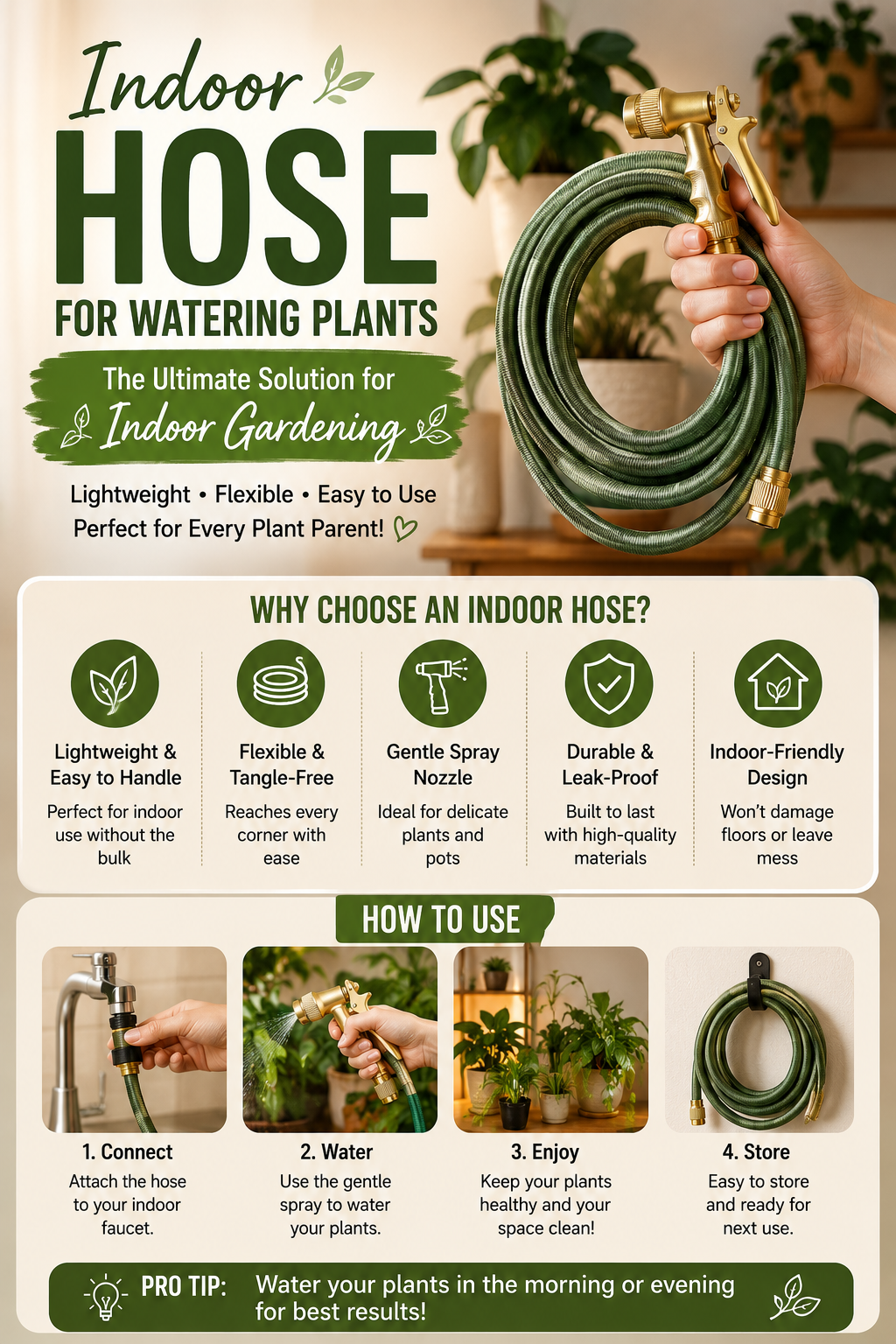
An indoor hose for watering plants provides a convenient and efficient way to keep your indoor plants hydrated. It allows you to easily reach all areas of your plants and provides a gentle and precise stream of water to avoid overwatering.
It is important to choose a hose with the right length and nozzle options to fit your specific indoor gardening needs. Indoor hoses are designed to be lightweight and flexible, making them easy to maneuver around furniture and other obstacles.
They can also be easily stored in small spaces when not in use. With the right indoor hose, you can ensure that your indoor plants receive the proper amount of water to thrive and flourish.
Understanding Indoor Hoses
Indoor hoses for watering plants are a convenient solution for maintaining indoor gardens. These hoses are designed to be lightweight, flexible, and easy to maneuver, making them suitable for indoor use and ideal for watering plants in tight spaces. With their compact design and efficient water flow, indoor hoses are a practical choice for keeping your indoor plants healthy and thriving.
Definition And Purpose
An indoor hose is a flexible tube used to transport water from a source to a watering can or directly to plants. It is designed specifically for indoor use, allowing homeowners to efficiently water their houseplants and indoor gardens. These hoses are often smaller and more lightweight than traditional outdoor hoses, making them ideal for maneuvering around furniture and tight spaces.
Types Of Indoor Hoses
Indoor hoses come in a variety of types to suit different watering needs. The most common types include:
- Coiled Hoses: These hoses are designed to retract to a smaller size when not in use, making them compact and easy to store.
- Flat Hoses: These hoses lay flat when empty, minimizing kinks and tangles.
- Retractable Hoses: These hoses can be extended to reach specific areas and then retract to their original size for convenient storage.
Traditional Vs. Expandable Hoses
Traditional indoor hoses are typically made of rubber or vinyl, offering durability and resistance to kinking. On the other hand, expandable hoses are constructed with a flexible outer material that expands when filled with water, then contracts when the water is turned off, allowing for easy storage in tight spaces.
Material And Durability
When selecting an indoor hose, it’s important to consider the material and durability. Rubber hoses are known for their resistance to abrasion and extreme temperatures, while vinyl hoses are lightweight and less likely to kink. It’s essential to choose a hose that suits the specific watering needs and conditions in your indoor spaces to ensure long-lasting performance.
Benefits Of Using An Indoor Hose
Indoor hoses are a game-changer for plant enthusiasts, offering a range of benefits that make watering plants a breeze. Whether you’re tending to delicate houseplants or nurturing a burgeoning indoor garden, an indoor hose can elevate your watering routine to the next level. From increased watering efficiency to space-saving designs, the advantages of using an indoor hose are undeniable.
Watering Efficiency
Using an indoor hose for watering plants ensures precise and efficient water delivery. With the ability to control the water flow and direction, you can target the base of each plant with accuracy, minimizing waste and avoiding overwatering. This efficient watering method promotes healthier plant growth and conserves water resources, making it an environmentally friendly choice.
Space-saving
Indoor hoses are designed to be compact and space-efficient, making them ideal for small living spaces or urban dwellings. Their flexible, lightweight construction allows for easy storage in cabinets or closets when not in use, freeing up valuable space in your home. Say goodbye to bulky traditional hoses and hello to a streamlined indoor watering solution.
Convenience And Accessibility
Having an indoor hose at your disposal means easy access to water, right at your fingertips. No more lugging heavy watering cans or making constant trips to the sink. With an indoor hose, you can conveniently reach every corner of your indoor garden with minimal effort. The accessibility and convenience provided by an indoor hose simplify your daily plant care routine, saving both time and energy.
How To Choose The Best Indoor Hose
When it comes to watering your indoor plants, having the right hose can make all the difference. From ensuring proper hydration to providing ease and convenience, finding the best indoor hose is essential for the health and well-being of your plants. Here are some key considerations to keep in mind when choosing the best indoor hose for your plant watering needs.
Consideration Of Plant Needs
Before selecting an indoor hose, it’s important to consider the specific needs of your plants. Different plants require different watering schedules and methods. While some plants may thrive with a gentle mist, others may prefer a more direct stream of water. Consider the specific watering needs of your plants to determine the type of hose and nozzle that will provide the ideal watering solution.
Length And Flexibility
When choosing an indoor hose, the length and flexibility of the hose are important factors to consider. A hose that is too short may limit your reach, making it difficult to water plants in various locations. Opt for a hose that offers sufficient length and flexibility to reach all your plants without strain or difficulty. Additionally, consider the material of the hose, as a flexible and kink-resistant hose can make watering tasks much more manageable.
Nozzle Options And Additional Features
Having the right nozzle options and additional features can greatly enhance the watering experience. Look for a hose that comes with a variety of nozzle options, such as adjustable spray patterns or a gentle shower setting. This allows you to customize the water flow to meet the specific needs of each plant. Additionally, some hoses come with convenient features such as a lightweight design, easy-grip handles, and leak-resistant connectors, which can further improve the ease and efficiency of plant watering.
Maintenance And Care Tips For Indoor Hoses
When it comes to watering your indoor plants, having a reliable and well-maintained hose is essential. Proper maintenance and care not only extend the lifespan of your indoor hose but also ensure efficient and effective watering. In this section, we will explore essential tips for maintaining and caring for your indoor hose to keep it in top condition.
Cleaning And Storage
Regular cleaning and proper storage are crucial for maintaining the functionality and cleanliness of your indoor hose. After each use, thoroughly rinse the hose with clean water to remove any dirt, debris, or residue. To prevent mildew or mold growth, ensure the hose is completely dry before storing it. It’s advisable to hang the hose in a well-ventilated area to air dry completely.
Preventing Leakage And Wear
Inspect your indoor hose regularly for any signs of wear, including cracks, leaks, or bulges. Address any issues promptly to prevent the hose from deteriorating further. To prevent leakage, ensure all connections are secure and free of damage. Using proper fittings and connectors can also help minimize the risk of leaks and wear.
Extending The Lifespan
To extend the lifespan of your indoor hose, it’s important to handle it with care. Avoid dragging the hose across rough surfaces or sharp edges, as this can cause damage and abrasion. When not in use, store the hose on a suitable hose reel or hanger to prevent kinks and tangles, which can lead to premature wear and tear.
Practical Usage Tips For Efficient Watering
Efficient watering is essential for the health and growth of indoor plants. By following proper watering techniques, understanding watering frequency, and maximizing plant health and growth, you can ensure that your plants thrive.
Proper Watering Techniques
Using the right watering technique is crucial for ensuring your plants receive the proper amount of moisture without causing waterlogging and root rot. Here are some practical watering techniques to consider:
- Water at the base of the plant to avoid wetting the foliage.
- Allow the soil to dry slightly between watering to prevent overwatering.
- Use a watering can with a narrow spout for precise watering.
- Water in the morning to allow excess moisture to evaporate during the day.
Understanding Watering Frequency
Understanding the watering needs of your plants is key. Different plants have different moisture requirements, so it’s important to adjust your watering frequency accordingly. Here are some tips for determining the watering frequency for your indoor plants:
- Check the soil moisture level by inserting your finger into the soil.
- Research the specific watering needs of each plant species in your indoor garden.
- Monitor the growth and condition of your plants to assess their water requirements accurately.
Maximizing Plant Health And Growth
To maximize the health and growth of your indoor plants, consider the following tips:
| Tip | Description |
|---|---|
| Use a quality potting mix | Ensure your plants are potted in a well-draining soil mix appropriate for their species. |
| Provide adequate sunlight | Place your plants in locations that provide the right amount of natural light based on their needs. |
| Monitor humidity levels | Ensure the humidity level is suitable for your plants, especially for tropical species. |
| Fertilize as needed | Feed your plants with a balanced fertilizer following the recommended application guidelines. |
Frequently Asked Questions For Indoor Hose For Watering Plants
What Are The Benefits Of Using An Indoor Hose For Watering Plants?
Using an indoor hose makes watering convenient, reduces spillage, and ensures even distribution of water.
How To Choose The Right Indoor Hose For Watering Plants?
Consider the length, material, and diameter that best suits your indoor gardening needs when selecting an indoor hose.
Are Indoor Hoses Suitable For All Types Of Indoor Plants?
Yes, indoor hoses are suitable for most indoor plants, from delicate ferns to tropical houseplants, providing efficient watering.
How To Maintain And Store An Indoor Hose For Longevity?
To maintain an indoor hose, regularly inspect for leaks, clean after use, and store it in a dry, shaded area away from direct sunlight.
Conclusion
Incorporating an indoor hose into your plant care routine can help simplify watering tasks. With features designed for efficiency and convenience, indoor hoses offer a practical solution for maintaining houseplants. By selecting the right hose and using it correctly, you can ensure your plants receive the water they need for optimal growth and health.